MGO FATPack-Pro Backpack Medical Kit
Welcome to today’s breakdown. My name is Brendan, and in our session today, we are going to dive deep into a piece of equipment that bridges the gap between field trauma management and tactical utility: the Medical Gear Outfitters (MGO) FATPack-Pro Backpack Medical Kit.
In my time as an FMF Corpsman deployed to Helmand Province, and later managing EMS operations and clinical departments stateside, I’ve had my hands on countless medical kits. A common failure point I see—whether in a military theater, a chaotic civilian EMS scene, or a prepared citizen's vehicle—is a fundamental mismatch between the gear packed, the container housing it, and the training of the end-user. We are going to look at this kit not just as a bag of supplies, but as an operational system.
Let’s dissect this kit methodically.
Target Use Case: This kit is optimized for a Patrol Vehicle Trunk Bag, a Range Medical Bag, an Active Shooter Response (ASR) Kit for Law Enforcement, or a comprehensive home-defense/preparedness system.
The "Who" & "What": The FATPack-Pro is a scalable, mid-sized trauma backpack designed to manage serious polytrauma or multiple casualties prior to the arrival of advanced life support. While its layout is highly intuitive, its core life-saving interventions—particularly wound packing with hemostatics and airway management—require dedicated, formal training, making it best suited for credentialed first responders, clinical professionals, or heavily trained laypeople.
Pros & Cons Table
Pros:
Strict Zero-Filler Policy: No useless bandaids or CPR face shields; 100% focused on trauma.
CoTCCC Compliant Components: Genuine CAT/SOF-T tourniquets and proven hemostatics.
Exceptional Hypothermia Prep: Inclusion of two Blizzard Blankets goes above and beyond standard kits.
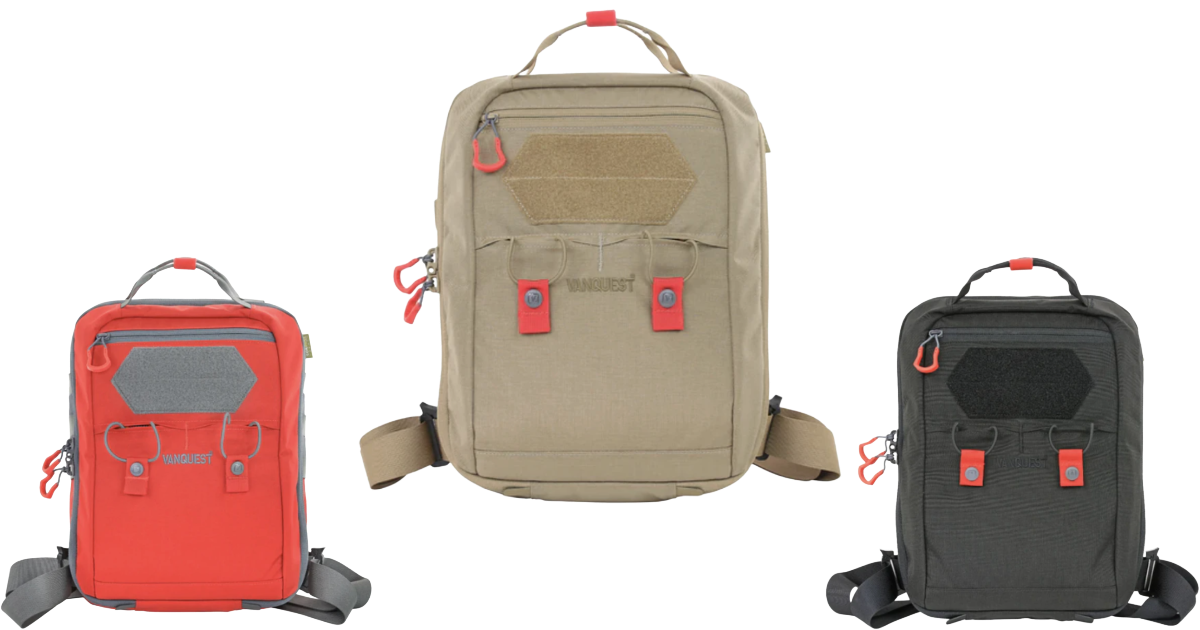
Ergonomics: Vanquest bag design offers rapid, tear-away access without "gear vomit."
Cons:
No Mention of NPA Lubricant: A critical omission for practical airway deployment.
Price Point: At over $400, it is a significant investment for a casual user.
No Diagnostic Tools: Lacks a simple pulse oximeter or penlight for thorough patient assessment.
Scope Limit: Lacks advanced airway (SGA) or needle decompression for ALS providers.
Technical Specifications & Anatomy
Let's look at the physical realities of this gear. In the real world, if a kit is too bulky, it gets left behind. If it's too flimsy, it fails when you drop it on the asphalt.
Dimensions & Weight:
MGO offers this in two footprints based on the Vanquest chassis:
Small: 13.5” (H) x 9” (W) x 4.75” (D)
Large: 15” (H) x 10” (W) x 5.5” (D)
While the weight depends on your specific customizations (roughly 3.5 to 4.5 lbs fully loaded), this footprint is highly advantageous. It is flat enough to sit behind a truck seat or mount to a plate carrier via MOLLE without throwing off your center of gravity during dynamic movement.
Materials & Build Quality:
The Vanquest FATPack series is universally respected. We are looking at rugged 500D Cordura nylon. Why 500D and not 1000D? Because 500D saves weight and offers better flexibility while maintaining excellent abrasion resistance. It utilizes YKK zippers—which are non-negotiable in the field, as cheap zippers will invariably blow out under the stress of an overpacked bag. For our tactical personnel, the Cordura holds up well, though non-black/tan colors may lack complete NIR (Near-Infrared) compliance depending on the dye lot.
Component Breakdown (The M.A.R.C.H. Algorithm):
Let’s categorize the payload exactly as you would assess your patient.
Massive Hemorrhage:
o 2x Tourniquets: Choice of genuine North American Rescue CATs (Gen 7) or Tactical Medical Solutions SOF-Ts.
o 1x Hemostatic Agent: Choice of Celox Rapid or QuikClot Combat Gauze.
o 2x Israeli Bandages (Emergency Trauma Dressings).
o 2x Kling Rolls: Excellent for standard wound packing or secondary wrapping.
Airway:2x #28 Nasopharyngeal Airways (NPA).(Note: You must supply your own water-soluble lubricant; dry-inserting an NPA in the field is highly traumatic to the nasal mucosa).
Respiration:2x HyFin Compact Chest Seals (Vented). Vents are critical to allow trapped air and blood to escape, mitigating the risk of tension pneumothorax.
Circulation: No IV/IO access tools are included, which is appropriate for a BLS/IFAK-level bag. Circulation management here relies heavily on effective hemorrhage control and shock mitigation.
Hypothermia (and Head injuries):2x Blizzard Blankets. I cannot overstate how excellent this inclusion is. Hypothermia is the lethal partner of hemorrhage in the "Trauma Triad of Death." Standard mylar space blankets often fail in real-world wind and rain; Blizzard Blankets utilize cellular technology to trap heat effectively.
Equipment: 3x Pairs of Nitrile Gloves, 1x Roll of Gecko Tape, 1x Trauma Shears.
Clinical Efficacy & Standards Compliance
As an educator, I do not tolerate counterfeit or substandard gear. MGO has done an outstanding job here.
Certifications: Every critical intervention item in this bag holds CoTCCC (Committee on Tactical Combat Casualty Care) recommendation. The CAT Gen 7 and the SOF-T are the undisputed kings of extremity hemorrhage control. They are FDA-cleared and heavily vetted.
Evidence-Based Performance: Let’s talk about your hemostatic options here—specifically QuikClot Combat Gauze (kaolin-impregnated) and Celox Rapid (chitosan-based). Multiple peer-reviewed studies, including extensive porcine models published in the Journal of Trauma, demonstrate that these agents significantly outperform standard gauze in controlling lethal junctional hemorrhage (e.g., femoral artery lacerations high in the groin). Celox Rapid, in particular, is designed to drastically reduce the required compression time from 3 minutes down to 60 seconds. In a tactical or austere environment, saving two minutes of manual pressure can allow you to address a second casualty or return fire.
Peer Review: The contents of this bag mirror the exact issue items utilized by the US Department of Defense, the FBI Hostage Rescue Team (HRT), and standard-setting civilian agencies like the Seattle Medic One system.
Operational Ergonomics (The "Stress Test")
In a high-stress event, your heart rate pushes past 140 BPM, your peripheral vision narrows, and auditory exclusion sets in. How does this bag perform under that physiological load?
Deployment Speed: The Vanquest FATPack uses a unique, intuitive dual-zipper pull system. You grab the top handle and pull down aggressively. The bag flays open in a split second. This "tear-away" dynamic is exceptional for rapid deployment.
Fine Motor vs. Gross Motor: The external staging of the bag allows you to mount tourniquets on the outside. Applying a CAT is a gross-motor skill, achievable with blood-slicked hands or while wearing tactical gloves. Conversely, accessing the #28 NPA or packing a wound with Celox requires fine motor skills. The high-visibility interior of the FATPack provides excellent contrast against dark blood and dirt, helping your eyes guide your hands when fine motor dexterity degrades.
Staging & Organization: MGO's utilization of the Vanquest platform completely eliminates "gear vomit." Elastic loops and modular pockets keep every chest seal and gauze roll exactly where you placed it. When you open the bag, you are presented with a clean, color-coded medical dashboard.
Layperson Accessibility vs. Professional Utility
We must differentiate between having gear and knowing how to use it.
The Knowledge Gap: This kit sits right on the edge of advanced first aid.
Intuitive (Layperson): The HyFin chest seals are effectively "peel-and-stick," and the CAT tourniquet, while requiring practice, can be taught to a layperson in 10 minutes.
Advanced (Professional): Wound packing with hemostatics requires an understanding of arterial anatomy and the discipline to pack to the bone. Inserting an NPA requires assessing for basilar skull fractures (e.g., Battle's sign, CSF rhinorrhea). I highly recommend laypeople seek out a "Stop the Bleed" or TECC (Tactical Emergency Casualty Care) course before carrying this.
Instructions: Unlike some consumer-level kits, this package does not appear to include a comprehensive, step-by-step algorithm card. In an emergency, a QR code to a video is useless if cell towers are down or your hands are covered in blood. I strongly suggest adding a waterproof M.A.R.C.H. reference card to the front pocket.
Liability Note: For my civilian and lay-responder students: Remember your scope of practice. Good Samaritan laws generally protect you when performing life-saving measures like tourniquet application and wound packing. However, inserting an airway adjunct (NPA) crosses a line into an invasive procedure in many jurisdictions. Know your local laws, and never perform an intervention you have not been trained to execute.
Comparison & Value Analysis
Let’s talk dollars and sense. At approximately $405.99, this is a premium product.
The Competition: When we compare this to the industry gold standard—such as the North American Rescue M-FAK or their Medic/Trauma Backpacks—the MGO FATPack-Pro holds its own brilliantly. NAR's larger bags easily push the $600-$800 range. MGO keeps the price lower by utilizing the Vanquest chassis rather than proprietary NAR nylon, without sacrificing durability.
Price-to-Utility Ratio: Is the $400+ price tag justified? Absolutely. Let’s look at the math: Two CAT tourniquets ($60), Hemostatic Gauze ($45-$50), two Hyfin Chest seals ($35), two Blizzard Blankets ($70+), plus the Vanquest FATPack bag itself ($80-$100). Add in the Israeli bandages, NPAs, shears, and Kling, and the retail value of the components roughly equals or exceeds the asking price.
Scrutinizing the "Filler": I must commend MGO for what they left out. There is zero "filler" gear here. There are no useless 1x1 inch bandaids, cheap plastic tweezers, or low-grade knuckle dressings to artificially inflate the item count. You are paying for high-yield, life-saving trauma equipment, and nothing else.
Final Verdict & Scoring
Let's break down the final grade based on our clinical and operational standards.
Durability (9/10): The 500D Cordura and YKK zippers will survive patrol car trunks, range dirt, and austere environments. Only 1000D would score higher, but at the cost of unnecessary weight.
Clinical Trust (10/10): 100% CoTCCC-approved components. Genuine, name-brand life-saving interventions. No counterfeits.
Versatility (8/10): Excellent as a vehicle, home, or range bag. However, it lacks minor diagnostic or basic first-aid items (like a penlight, pulse ox, or minor wound care), meaning you might need a secondary "boo-boo" kit for daily, non-lethal inconveniences.
Value (8.5/10): It is an expensive initial outlay, but the lack of "fluff" and the premium quality of the hemostatics and hypothermia gear make it a financially sound investment for serious personnel.
Overall Score: 8.8 / 10
Final Thoughts: If you are an EMT, a law enforcement officer, or a citizen who has taken the time to get professionally trained in hemorrhage control and basic airway management, the MGO FATPack-Pro is a phenomenal off-the-shelf solution. It prevents the headache of piecing together a kit from a dozen different vendors and guarantees you are carrying the exact same caliber of equipment that I trusted my life—and the lives of my Marines—with overseas.
Stay safe, train hard, and remember: the best gear in the world cannot compensate for a lack of training. Let me know if you have any specific questions on how to stage this kit or integrate it into your current loadout.
