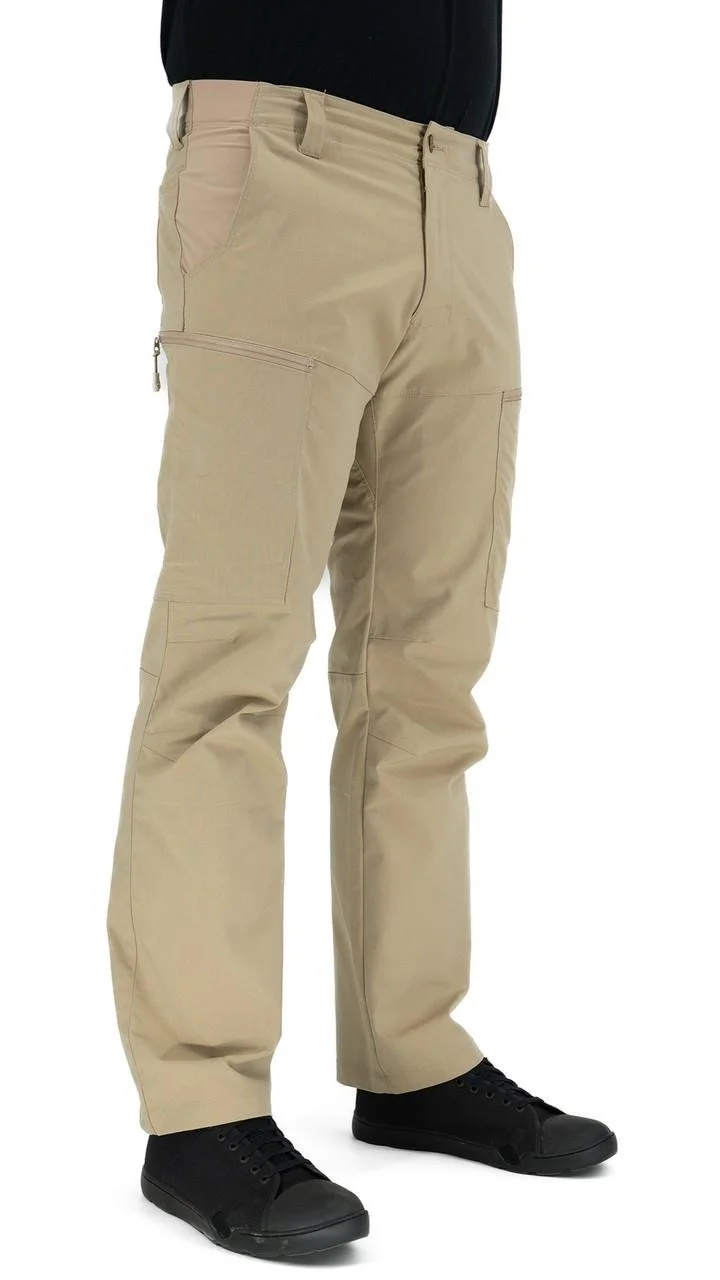
LA Police Gear (LAPG) BFE Stretch Tactical Pant
Throughout my time as an FMF Corpsman in Helmand and later managing EMS operations and surgical departments, I’ve learned that "tactical" gear is only as good as its ability to support your clinical mission under stress. Whether you are a Paramedic, a Law Enforcement Officer, or a prepared citizen, your clothing is your first layer of equipment.
Today, we are conducting a deep-dive evaluation of the LA Police Gear (LAPG) BFE Stretch Tactical Pant. While a pair of pants isn't a "medical device" in the traditional sense, for those of us in Tactical Emergency Medicine (TEMS) or Disaster Response, our apparel is the platform that carries our life-saving tools. If your platform fails, your response fails.
Let’s break this down with the same precision we’d use in a clinical post-action report.
Target Use Case: Everyday Carry (EDC), Range Operations, EMS/First Responder Patrol, and Low-Profile Field Work.
The "Who" & "What": The LAPG BFE Stretch Tactical Pant is a high-utility, budget-conscious garment designed for operators who require maximum pocket organization without the "over-tactical" look of traditional BDUs. It is suitable for all skill levels, from the professional medic to the prepared layperson, acting as a foundational load-bearing layer for medical and defensive tools.
Pros & Cons Table:
Pros:
Mechanical Stretch: High mobility for clinical maneuvers (kneeling, dragging).
Internal Organization: Dedicated slots for tourniquets and trauma shears.
Low-Profile Aesthetic: Blends better in urban environments than cargo-heavy BDUs.
Cost-to-Value: High performance-to-price ratio for agency-wide issuance.
Cons:
Fabric Weight: Thinner than 1000D Nylon; may wear faster in high-friction environments.
Teflon Coating Wear: Water repellency degrades after multiple industrial washes.
Pocket Depth: Front pockets can become crowded if carrying a full EDC kit.
NIR Compliance: Not guaranteed; may "glow" under night vision (IR).
Technical Specifications & Anatomy
Dimensions & Weight:
Constructed from a 65% Polyester / 35% Cotton blend with a specific "Mechanical Stretch" weave. The weight is approximately 7.5 oz, which strikes a balance between durability and breathability—a critical factor for preventing heat-related illness during high-exertion operations.
Materials & Build Quality:
Fabric: Ripstop weave treated with a Teflon coating. In the field, this means blood, emesis, and saline roll off rather than soaking in—a minor but vital "first line" of BBP (Bloodborne Pathogen) protection.
Hardware: Features a brass YKK zipper and a heavy-duty metallic fly button. In my experience, plastic buttons are a single-point-of-failure during a casualty drag; metal is the standard.
Reinforcements: Double-layered knees (articulated) and a gusseted crotch. If you've ever blown out a seam while performing a needle decompression or a femoral pressure point hold, you know why a gusseted crotch is non-negotiable.
Component Breakdown (The M.A.R.C.H. Integration):
While these are pants, we evaluate them by how they facilitate the M.A.R.C.H. algorithm:
Massive Hemorrhage: The BFE pants feature 12 total pockets. The front "hip" pockets are notched for knife clips, but more importantly, the cargo pockets are positioned higher on the thigh. This prevents a CAT Gen 7 Tourniquet from slapping against your knee during a sprint to a casualty.
Airway/Respiration/Circulation: The internal "organizer" slots within the cargo pockets allow for the staging of a 14-gauge ARS needle, a NPA (Nasopharyngeal Airway), or a rolled pair of chest seals without them bunching at the bottom.
Hypothermia: While the pants don't treat hypothermia, the quick-dry nature of the poly-cotton blend is essential. Wet clothes are a heat-sink; these pants shed moisture faster than 100% cotton denim.
Clinical Efficacy & Standards Compliance
In the world of Medical Education, we look for "Standard of Care."
Certifications: While garments aren't "CoTCCC Recommended" (as that applies to medical devices), the pocket dimensions are compatible with CoTCCC-approved devices like the North American Rescue CAT, the SOFTT-W, and the SAM XT.
Evidence-Based Performance: Clinical studies in ergonomics (specifically within EMS cohorts) show that clothing restricted at the joints increases rescuer fatigue. The "BFE" (Big F*ing Efficiency) stretch allows for a full range of motion during "The Pit Crew" CPR approach, where responders must move fluidly around a patient in a confined space.
Peer Review: LAPG gear is a staple among private military contractors (PMCs) and budget-strapped LE departments. While it may not be the "Tier 1" choice like Crye Precision, it is a "Workhorse" grade product frequently seen in high-volume EMS systems.
Operational Ergonomics (The "Stress Test")
Deployment Speed:
In a "Care Under Fire" scenario, seconds are blood. The BFE pants utilize a mix of open-top and button-closure pockets. I prefer the open-top "mag" pockets for staging a trauma shear. You can draw the shear or a TQ with a single-handed gross motor movement, even if your hands are slick with fluid.
Fine Motor vs. Gross Motor:
The pocket flaps are large enough to be manipulated while wearing 8-mil nitrile gloves or tactical gloves. The "mechanical stretch" ensures that when you drop into a "high-kneel" to secure an airway, the fabric doesn't bind or pinch, which would otherwise distract the clinician from the task at hand.
Staging & Organization:
One of the biggest pitfalls in the field is "Gear Vomit"—where you open a pocket and your gauze, tape, and gloves all fall out into the dirt. The BFE’s internal dividers keep your "First-In" items indexed. You know exactly where your hemostatic agent is without looking.
Layperson Accessibility vs. Professional Utility
The Knowledge Gap:
For a layperson, these pants are "plug and play." However, the danger lies in "over-packing." A layperson might see 12 pockets and fill them with gear they aren't trained to use (e.g., decompression needles or sutures).
Instructions:
The product does not come with medical instructions. As your instructor, I must emphasize: The gear in your pockets does not grant you the scope of practice. If you are a layperson wearing these, focus your "pocket loadout" on pressure dressings, vented chest seals, and TQs.
Liability Note: Always operate within your level of training. Carrying advanced airway adjuncts in these pants without a license can lead to significant legal exposure under Good Samaritan laws, which typically only cover "reasonable" layperson interventions.
Comparison & Value Analysis
The Competition:
5.11 Tactical Stryke Pant ($80-90): The industry gold standard. The LAPG BFE is remarkably similar in feel and function but at roughly 40-50% of the cost.
Crye Precision G3 ($200+): Crye offers better NIR compliance and integrated kneecaps. However, for 90% of EMS and LE work, the Crye is overkill.
Price-to-Utility Ratio:
At the current price point (often under $45), the BFE pant is an exceptional value.
Scrutiny of "Filler": Unlike many "pre-made" IFAKs that include useless items like 2x2 gauze pads or off-brand plastic tweezers, these pants allow you to curate your own kit.
The Verdict on Value: You aren't paying for "brand prestige." You are paying for a functional fabric that survives the rigors of an ambulance floor or a gravel range.
Final Verdict & Scoring
As someone who has worn out many a pair of trousers in the Helmand dirt and on the streets of US cities, here is my clinical-operational score for the LAPG BFE Stretch Tactical Pant:
Durability: 7/10 (Solid for daily use; will eventually fray at the cuffs in extreme terrain).
Clinical Trust: 9/10 (Reliably holds life-saving gear in the correct orientation).
Versatility: 9/10 (Works for the range, the ambulance, or a casual hike).
Value: 10/10 (Unbeatable performance at this price bracket).
Overall Score: 8.75 / 10
Final Thoughts from Brendan:
If you are looking for a platform to carry your M.A.R.C.H. kit that won't break the bank—allowing you to spend more money on actual training and CoTCCC-approved medical supplies—the BFE Stretch Pant is a "Go."
