NAR ReFlex™ IFAK System Kit
Hello there. I’m Brendan. It’s good to have you here.
Whether you’re a medic prepping for a deployment, a patrol officer looking to upgrade your belt, or a prepared citizen making sure your family is safe, we’re going to look at this piece of kit with a critical, clinical eye. Today, we are dissecting the North American Rescue (NAR) ReFlex™ IFAK System Kit.
Let's get into it!
Target Use Case: This system is optimized for First Responders and Tactical Professionals (LEO/Military) as a belt-mounted or plate-carrier-mounted solution. It excels in high-mobility environments where rapid, ambidextrous access is non-negotiable.
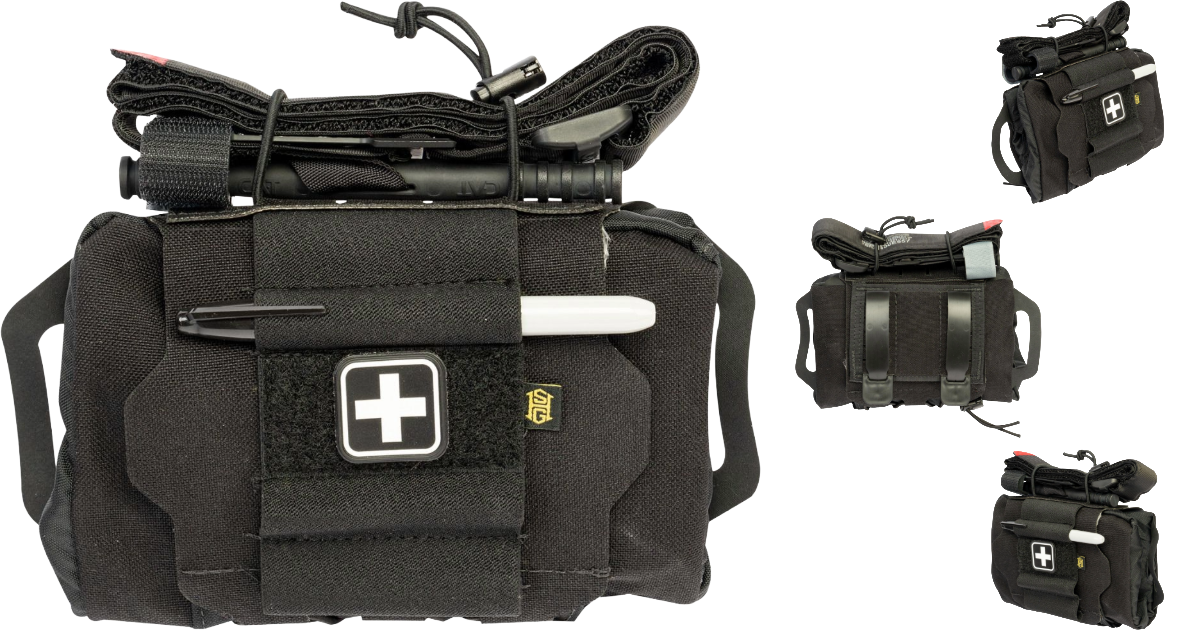
The "Who" & "What": The ReFlex IFAK is a two-piece system—a mounting "sleeve" and a removable "med roll"—designed to provide immediate access to TCCC-compliant life-saving supplies. While the hardware is intuitive, the internal components (specifically the chest seals and hemostatics) require Intermediate to Advanced First Aid training to be utilized effectively and ethically.
PROS & CONS SNAPSHOT
PROS:
Ambidextrous Access: Can be pulled from either side with one hand.
CoTCCC Components: No "filler" items; contains genuine Gen 7 CAT and Combat Gauze.
Retention: Uses friction and H-style pull handles; very secure during high-intensity movement.
Durability: Built with heavy-duty Cordura; high abrasion resistance.
CONS:
Bulk: When fully loaded, it has a significant "footprint" on the small of the back.
Complexity: The "med roll" folding method requires practice to re-pack correctly.
Cost: Premium pricing compared to "budget" kits that use generic components.
Specific Mounting: Best suited for belt-carry; can be awkward on some chest rigs.
Technical Specifications & Anatomy
When we talk about tactical gear, "ounces equal pounds, and pounds equal pain." But in medicine, "real estate is life."
Dimensions: Approx. 8” x 3” x 5.5”.
Weight: ~1.1 lbs (fully loaded).
Materials: Built primarily from 500D Cordura. I prefer 500D over 1000D for IFAKs because it offers a better balance of weight and flexibility while remaining NIR (Near-Infrared) compliant—meaning you won't glow like a Christmas tree under enemy night-vision goggles.
The "Sleeve" vs. "The Roll": The system uses a specialized hanger system. The sleeve stays on your belt (utilizing MALICE clips or belt loops), and the roll is what you actually take to the wound.
Component Breakdown (M.A.R.C.H. Categorization)
We don't just "throw bandages" at problems. We follow the M.A.R.C.H. algorithm. This kit is built specifically for this workflow:
Massive Hemorrhage: * 1x C-A-T® Tourniquet (Gen 7): The gold standard.
1x QuikClot® Combat Gauze (Z-Fold): Kaolin-impregnated for active clotting.
1x S-Rolled Gauze: For wound packing.
1x 4 in. Flat Emergency Trauma Dressing (ETD): Pressure bandage.
Airway: * 1x Nasopharyngeal Airway (28F) with Lubricant: For maintaining a patent airway in semi-conscious patients.
Respiration: * 2x HyFin® Vent Chest Seal (Twin Pack): For treating open pneumothorax (sucking chest wounds).
Circulation: * (Addressed primarily via hemorrhage control in this kit level).
Hypothermia/Other: * 1x pair Blue Response Gloves (Large): PPE is your first step.
1x Trauma Shears (7.25 in.): To expose the wound.
Clinical Efficacy & Standards Compliance
From a clinical educator's perspective, I don't care how "cool" a pouch looks if the stuff inside doesn't work.
CoTCCC Recommendation: This kit is a "Home Run" for compliance. The C-A-T Gen 7 is the primary recommended limb tourniquet by the Committee on Tactical Combat Casualty Care. The QuikClot Combat Gauze is the CoTCCC first-choice hemostatic dressing. You aren't buying "knock-off" tech here.
Evidence-Based Performance: Clinical studies (and my own experience in the field) show that kaolin-impregnated gauze significantly reduces time to hemostasis compared to standard gauze. In the "Golden Ten Minutes" of a trauma scene, those seconds saved are the difference between a save and a loss.
Peer Review: The ReFlex system and NAR components are currently standard issue for the U.S. Army, USMC, and various Federal Law Enforcement agencies (FBI/HRT). When you carry this, you are carrying the same gear used by the most elite trauma practitioners in the world.
Operational Ergonomics (The "Stress Test")
Imagine your hands are covered in blood, or it’s 0200 and you can’t see your own feet. How does this kit perform?
Deployment Speed: This is where the ReFlex shines. Many IFAKs require you to reach behind your back, find a zipper, and pull. The ReFlex uses Gross Motor Skills. You grab the "H-handle" on either side and pull. The med roll slides out of the sleeve instantly. No fumbling with zippers.
Fine vs. Gross Motor: The kit is designed to be operated with gloves. The pull tabs are oversized. However, the internal organization of the med roll (the small elastic loops) does require some fine motor precision to extract specific items like the NPA or the lube.
Staging & "Gear Vomit": Because the med roll unfolds into a flat surface, you don't have the "bucket effect" where you're digging for a bandage at the bottom of a pouch and everything else falls into the dirt. It stays organized on the "mat" while you work.
Layperson Accessibility vs. Professional Utility
I need to be very clear here: This kit contains "Prescription" level capability.
The Knowledge Gap: The Nasopharyngeal Airway (NPA) is a fantastic tool, but for a layperson who hasn't been taught how to measure and insert it, it can cause significant trauma to the nasal mucosa or even be ineffective. Similarly, using hemostatic gauze requires understanding wound-packing techniques—simply laying it on top of a wound does nothing.
Instructions: NAR includes basic pictorial instructions, but they are "reminders," not "teachers."
Liability Note: If you are a layperson carrying this, get trained. Under most Good Samaritan laws, you are protected if you act within your training. If you attempt an invasive procedure (like NPA insertion) without training and cause harm, you are entering a legal grey area.
Comparison & Value Analysis
The Competition: How does it stack up against the NAR M-FAK or the Blue Force Gear Micro Trauma Kit (MTKN)?
The M-FAK is a traditional pouch. It’s cheaper but slower to access.
The BFG MTKN is smaller and more "low profile," but it holds significantly fewer supplies.
The ReFlex is the "Heavy Hitter" of the belt-mounted world. It holds a full TCCC loadout while maintaining rapid access.
Price-to-Utility Ratio: At roughly $180-$200 (depending on configuration), you might flinch. However, let’s do the math:
Gen 7 CAT: $32
Combat Gauze: $45
HyFin Twin Pack: $15
The Pouch System: $80+
Total: You are paying for the convenience of a pre-staged, high-quality housing.
Filler Scrutiny: Unlike "Big Box Store" first aid kits, there are zero "filler" items here. No 1-inch band-aids, no cheap safety pins, no "alcohol prep pads" that dry out in a month. Every single item in this kit is designed to stop someone from dying of a preventable cause of death on the battlefield.
Final Verdict & Scoring
This is a professional-grade tool for people who take the "M" in M.A.R.C.H. seriously.
Durability: 10/10. It's North American Rescue. It will likely outlast your belt.
Clinical Trust: 10/10. Zero "off-brand" components. Everything is CoTCCC and FDA-cleared.
Versatility: 8/10. Excellent for belts and plate carriers. Too bulky for "pocket carry" or discrete EDC in civilian clothes.
Value: 9/10. It's an investment, but considering it contains $100+ of life-saving "consumables" alone, the price is justified.
Overall Score: 9.25 / 10
Final Thought: If you buy this, don’t just put it on your belt and forget it. Buy a "Trainer" TCCC kit. Practice pulling that med roll with your non-dominant hand. Practice opening that CAT Tourniquet with one hand. Gear is just plastic and nylon until you provide the soul and the skill to make it work.
Exclusive for my students and followers: Use code “CLS10” at checkout to get 10% OFF your entire order!
